
What is the Old-Catholic Church? Tradition, Autonomy, and Inclusive Justice
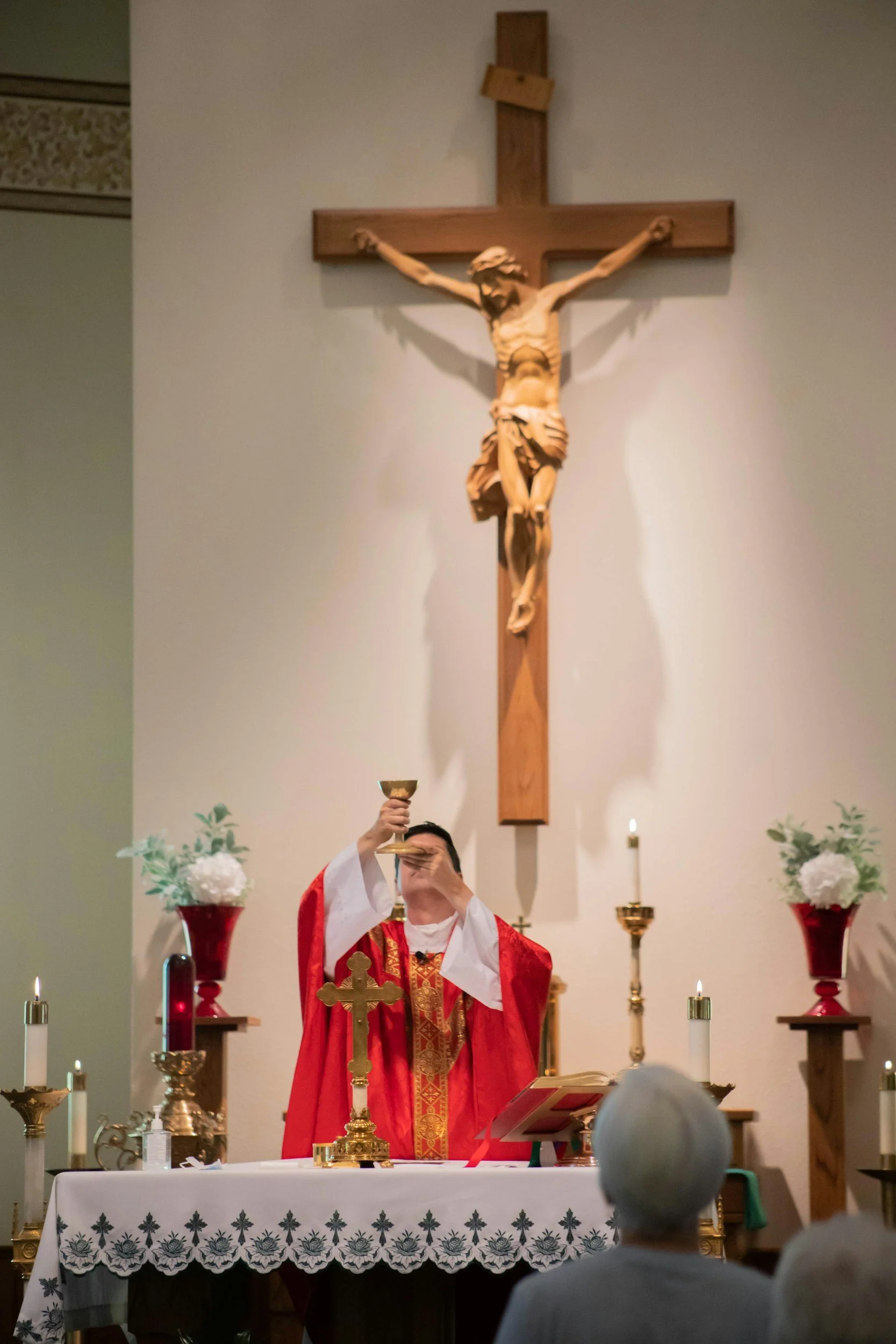
For those who find deep spiritual fulfillment in ancient Catholic traditions, the beauty of the historic liturgy, and the grace of the sacraments, yet simultaneously value local democracy, absolute inclusivity, and progressive social justice, the Old-Catholic tradition offers a true spiritual home.
We are a global family of independent Catholic communities that remain firmly rooted in apostolic history while being dynamically engaged with the ethical demands of the modern world. We are entirely Catholic, yet we operate independently of the centralized authority of the Roman Catholic Church.
Historical Foundations: The Path to Synodal Freedom
To grasp the identity of the Old-Catholic movement, one must look at a centuries-long desire to preserve the democratic, conciliar governance of the early, undivided Church. The movement's historical trajectory is defined by two major milestones:
The 18th-Century Root (Utrecht)
The historical independence of the movement traces back to the Netherlands in the early 1700s. The ancient See of Utrecht resisted efforts by the Vatican to place local church structures under direct papal control. In 1724, the Utrecht clergy exercised their historic rights to elect their own archbishop, Cornelius van Steenoven, without papal confirmation. This line of succession traces directly back to St. Willibrord, the historic 7th-century Apostle to the Netherlands. While the liturgy and sacramental life remained identical to Roman practices, the See of Utrecht operated autonomously for over a century, planting the seeds for a decentralized Catholic identity.
The 19th-Century Catalyst (Vatican I)
The definitive schism crystallized during the First Vatican Council (1869–1870). Under Pope Pius IX, the Roman Catholic Church promulgated the new dogmas of papal infallibility (that the pope is preserved from error when defining faith or morals ex cathedra) and universal papal jurisdiction over all local dioceses.
Prominent theologians, historians, and clergy across Germany, Austria, and Switzerland, most notably the renowned scholar J.J.I. von Döllinger, rejected these doctrines, arguing they lacked support from both Holy Scripture and ancient Church tradition. Refusing to submit to the centralization of absolute power, these communities formed autonomous national Catholic churches. In 1889, these European bodies united with the historic Archbishopric of Utrecht to create the Union of Utrecht.
Ecclesiastical Structure and the American Context
Unlike the top-down, monarchical hierarchy of Rome, the Old-Catholic tradition models its governance after the early Christian centuries, utilizing a synodal model where bishops, clergy, and laity share collective responsibility for the life and direction of the Church. Each regional or national church is self-governing, managing its own administrative affairs and democratically electing its own bishops through diocesan synods.
The North American Context
While European national churches coordinate through the International Bishops’ Conference (IBC) presided over by the Archbishop of Utrecht as a primus inter pares (first among equals), the historical trajectory expanded as the movement crossed the Atlantic.
In the United States, contemporary autonomous jurisdictions, such as those cooperating within the framework of the Old Catholic Confederation, maintain their own unique American Old-Catholic religious identity. Governed by their own autonomous Synods of Bishops, these American bodies remain structurally and canonically independent of the European Union of Utrecht's administrative authority, while continuing to fiercely honor the shared theological inheritance, historic creeds, and lines of apostolic succession derived from the mother See of Utrecht.
A Global Ecumenical Tapestry: Intercommunion and Fellowship
Because the movement prioritizes Christian unity over organizational uniformity, the Old-Catholic tradition has spent more than a century building formal ecumenical bridges based on the equality of national churches:
The Anglican Communion: Since the historic Bonn Agreement of 1931, the Union of Utrecht has maintained full communion with the global Anglican Communion (including the Episcopal Church in the US and the Church of England). In North America, this commitment to ecumenical solidarity is carried forward by local synods who maintain relationships with global Anglican provinces, such as the historic full communion established via the Christmas Agreement of 2013.
The Lutheran Communions: In 2016, the European Union of Utrecht signed a historic Full Communion Agreement with the Evangelical Lutheran Church of Sweden, recognizing a shared commitment to apostolic continuity and progressive ministry. Furthermore, individual national dioceses enjoy deep sacramental partnerships with United and Lutheran bodies, such as the landmark 1985 Eucharistic Hospitality agreement with the Evangelical Church in Germany (EKD).
Sacramental Validity and Our Relationship with Rome
A core pillar of Old-Catholic identity is transparency. We do not masquerade as Roman Catholics, nor do we seek to convert Roman Catholics to our jurisdictions. Integrity in the public square is paramount to our mission. We hold the Roman Catholic Church, its clergy, and its faithful in the highest professional and spiritual esteem.
Because our lines of apostolic succession are historically unbroken, the Roman Catholic Church officially recognizes the validity of Old-Catholic Holy Orders and sacraments. This relationship is governed by objective Roman Catholic canon law and magisterial documents, which provide a bridge of profound mutual respect:
1. Recognition as "True Particular Churches"
In the landmark Vatican document Dominus Iesus (2000), ratified by Pope St. John Paul II and signed by Cardinal Joseph Ratzinger (later Pope Benedict XVI), the Holy See explicitly affirmed the ecclesial reality of communions like ours:
"The Churches which, while not existing in perfect communion with the [Roman] Catholic Church, remain united to her by means of the closest bonds, that is, by apostolic succession and a valid Eucharist, are true particular Churches." (Dominus Iesus, IV, 17)
The Vatican further notes that these separated communions serve as genuine "means of salvation" due to the efficacy of the grace and truth safely preserved within them.
2. Sacramental Validity
This doctrinal reality was formalized via the Congregation for the Doctrine of the Faith on January 3, 1987 (Prot. no. 795/68), which explicitly placed the Old-Catholic churches in the same canonical category as the ancient Eastern Orthodox Churches regarding sacramental validity. Because our bishops were validly ordained, they retain the authentic power to administer the sacraments and ordain other priests and bishops.
3. Pastoral Safety Nets: Roman Canon 844 § 2
Because Rome recognizes Old-Catholic sacraments as entirely valid, Roman Catholic canon law provides a explicit pastoral provision for the faithful. Canon 844, Section 2 of the Roman Code of Canon Law states:
"Whenever necessity requires or genuine spiritual advantage suggests, and provided that the danger of error or indifferentism is avoided, it is lawful for the faithful for whom it is physically or morally impossible to approach a [Roman] Catholic minister, to receive the sacraments of penance, Eucharist, and anointing of the sick from non-[Roman] Catholic ministers in whose churches these sacraments are valid."
This means that in environments where a Roman Catholic cannot access their own priest, such as in complex crisis zones, remote hospitalizations, or specialized humanitarian settings served by networks like Diakonia Americas, they may lawfully request the sacraments of Penance, Eucharist, or the Anointing of the Sick from an Old-Catholic priest.
4. Navigating Contemporary Developments
In the spirit of complete candor, we recognize that our progressive theological evolution introduces canonical complexities from Rome's perspective. Because contemporary Old-Catholic jurisdictions ordain women to the priesthood and diaconate, the Roman Catholic Holy See maintains that such specific ordinations are invalid under its own internal canon law. Consequently, Rome does not canonically recognize sacraments (outside of baptism) performed specifically by female clergy, and notes that a female bishop could not pass on traditional lines of succession according to Roman criteria.
Old-Catholics navigate these differences openly and without animosity. Our male clergy maintain lines of apostolic succession that remain undisputed by Rome, allowing us to serve as a valid sacramental safety net for the faithful whenever necessity or genuine spiritual advantage arises.
Beliefs and Practices: Ancient Faith, Modern Expression
Old-Catholics maintain an unbroken continuity with the historic Catholic faith, accepting the Apostles' and Nicene creeds, the doctrinal definitions of the first seven ecumenical councils (325–787 CE), and the permanent obligation of the seven sacraments.
However, our pastoral application of this faith diverges fundamentally from Rome to reflect a living, compassionate theology:
Vernacular Liturgy: Long before the reforms of the mid-20th century, Old-Catholic communities abandoned Latin, pioneering the use of local, contemporary languages for the celebration of the Mass.
Eucharistic Hospitality: Believing that the altar belongs to Christ rather than an ecclesiastical institution, the Old-Catholic Church practices open communion, warmly welcoming all baptized Christians to receive the Holy Eucharist.
Equality in Ordination: Rooted in the understanding that the Holy Spirit bestows spiritual gifts without regard to gender, the Old-Catholic tradition has embraced the ordination of women to the priesthood and the diaconate.
Radical Affirmation: Across the contemporary Old-Catholic landscape and its collaborative missionary networks, such as Diakonia Americas, this ancient faith is expressed through the full sacramental blessing and pastoral affirmation of LGBTQ+ individuals.
Through this lens, the Church functions not as a closed fortress of dogma, but as an open sanctuary. We believe that true fidelity to ancient Catholic tradition requires an unwavering, hands-on commitment to human dignity, systemic advocacy, and direct relief. It is a tradition where the ancient liturgy meets modern justice.
Bibliography
“About Us.” The Old Catholic Church, theoldcatholic.church/about-us. Accessed 25 Jan. 2025.
"About Us." Union of Utrecht, www.utrechter-union.org/en/about-us/. Accessed 25 Jan. 2025.
Caruso, Robert. The Old Catholic Church. Apocryphile, 2009.
"Churches in Communion: The Church of Sweden and the EKD." Union of Utrecht, www.utrechter-union.org/en/about-us/ecumenical-relations/. Accessed 25 Jan. 2025.
Congregation for the Doctrine of the Faith. Decree on Validity of Sacraments of Old Catholic Churches. Prot. no. 795/68, Vatican City, 3 Jan. 1987.
Congregation for the Doctrine of the Faith. Declaration "Dominus Iesus": On the Unicity and Salvific Universality of Jesus Christ and the Church. Vatican City, 16 Jun. 2000.
Grondin, Fr. Charles R. "The Validity of Old Catholic Church Sacraments." Catholic Answers Q&A, www.catholic.com/qa/the-validity-of-old-catholic-church-sacraments. Accessed 25 Jan. 2025.
"History." Union of Utrecht, www.utrechter-union.org/en/about-us/what-is-the-ibc/history/. Accessed 25 Jan. 2025.
Horton, Victor James. The Old Catholic Church. Lulu.com, 2010.
Manos, John K. "The Old Catholic Church." Developments in Ecumenism: What Catechists Need to Know, 2022.
"The Old Catholic Confederation and the Anglican Communion." Old Catholic Confederation Archives, www.oldcatholicconfederation.org. Accessed 25 Jan. 2025.
"The Old Catholic Confederation and the Union of Utrecht: 125 Years." Old Catholic Confederation Documents, www.oldcatholicconfederation.org. Accessed 25 Jan. 2025.
Owles, Fr. R. Joseph. Catholic But Not Roman, Orthodox But Not Eastern: An Introduction to the Old Catholic Church. CreateSpace, 2013.
Queen, Andre. Old Catholic: History, Ministry, Faith & Mission. iUniverse, 2003.
The Code of Canon Law: Annotated. Canon 844 § 2, Vatican City, 1983.
The Old Catholic Missal and Ritual: Prepared for the Use of English-Speaking Congregations of Old Catholics in Communion with the Ancient Catholic Archiepiscopal See of Utrecht. Forgotten Books, 2015.
Wagner, Archbishop Wynn. A Pilgrim’s Guide to the Old Catholic Church. Mystic Ways Books, 2012.
"Who Are the Old Catholics?" Old Catholic Diocese of Napa, www.oldcatholicdioceseofnapa.org/Who_are_the_Old_Catholics_.html. Accessed 25 Jan. 2025.
